Mary Anning
-
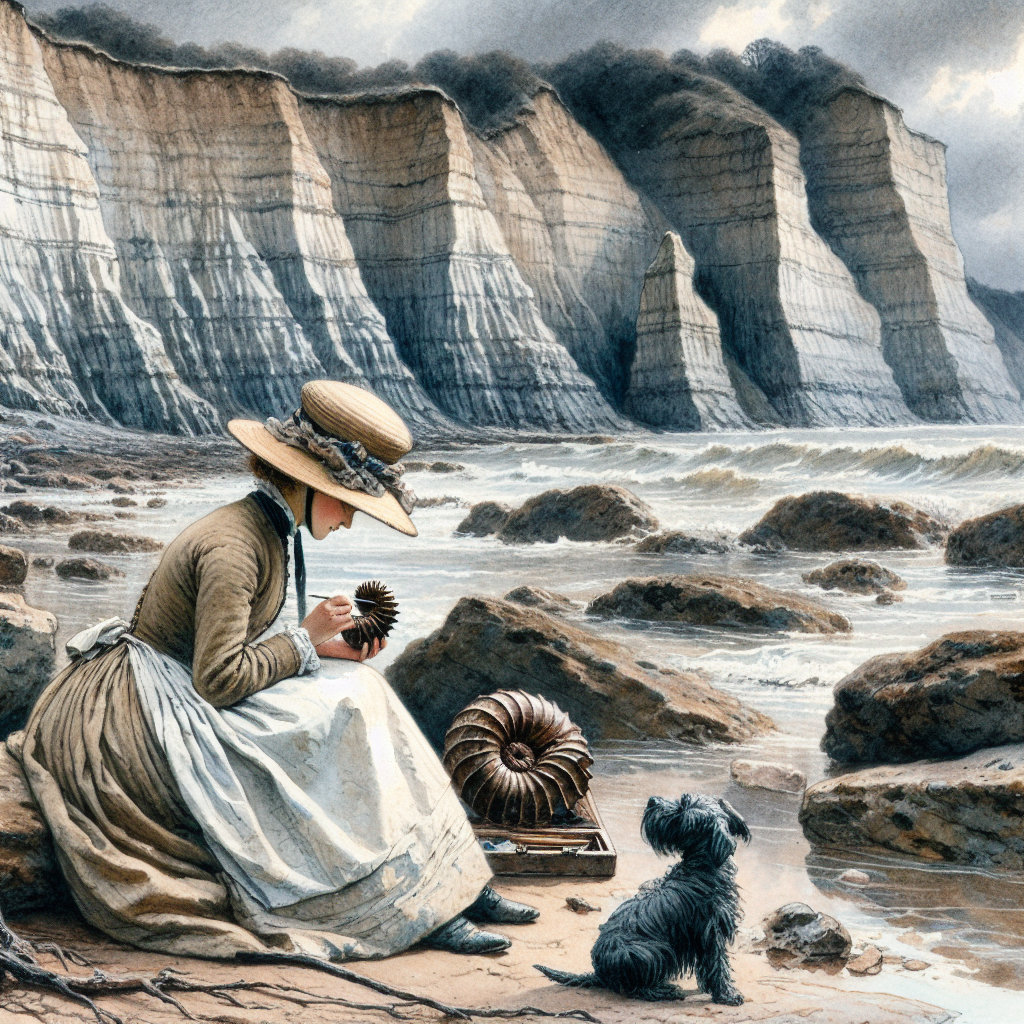
We interrupt your World War 3 doom scrolling to bring you #EuropeanBios entry 70, because why not? Today's subject is the uncontroversial, admirable life of Mary Anning, born 1799, who pretty much single-handedly up-ended our view of life's creation while men took all the credit.
-
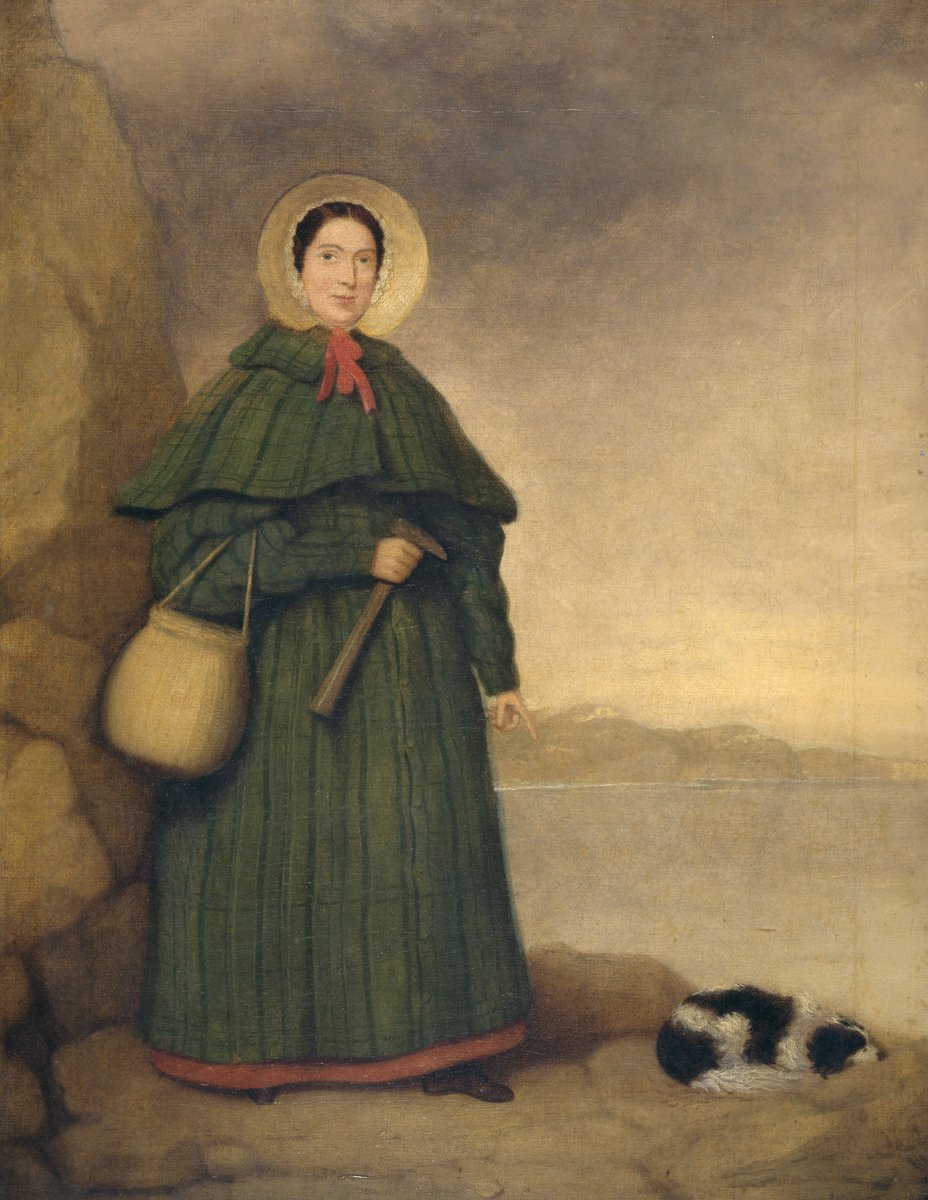
Portrait of Mary Anning with her dog Tray and collecting basket, by B.J. Donne, c. 1847 B.J. Donne, Portrait of Mary Anning, c. 1847, public domain -
Our story takes us to the tiny, pretty town of Lyme Regis, on the south coast of England, where Mary was born and would live her entire life with the exception of a single trip to London. In the early 1800s it had a boom as a seaside resort known for its healthy air and water.
-
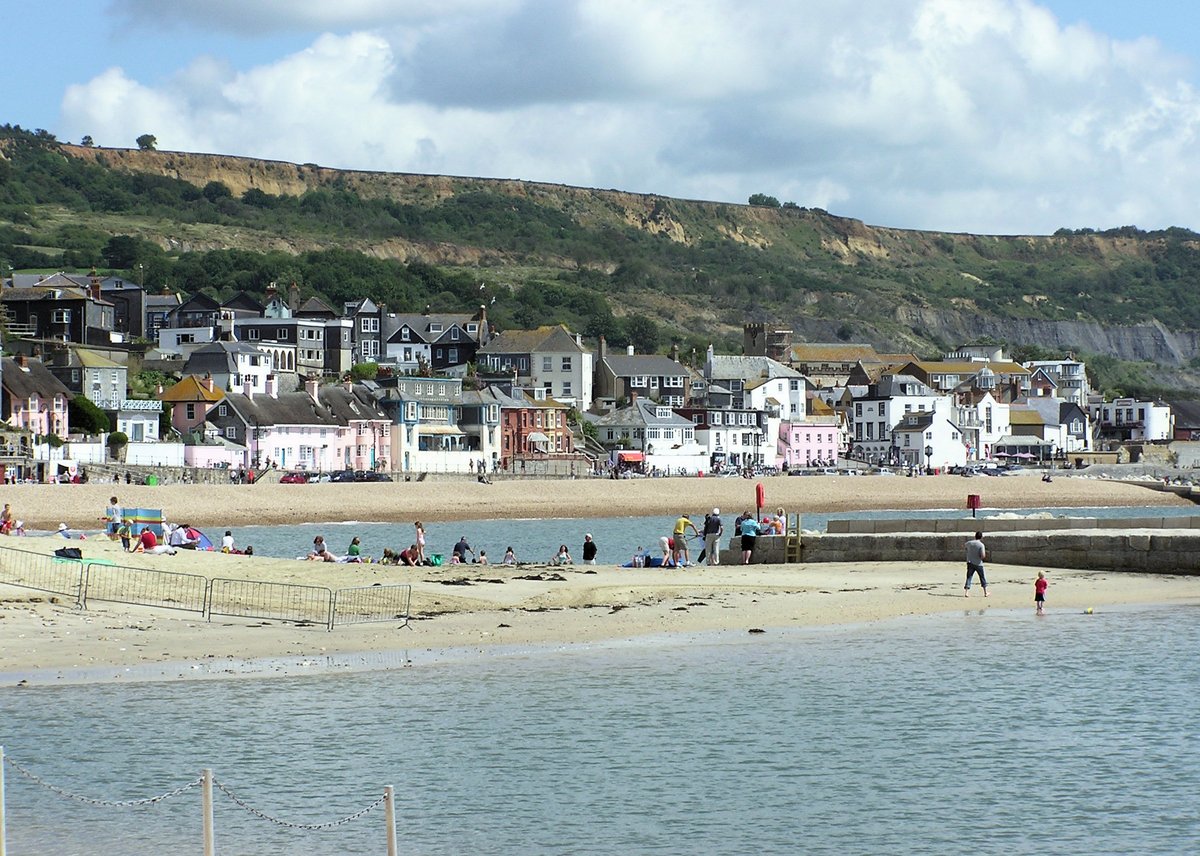
Lyme Regis, the small seaside town on the south coast of England where Mary Anning was born, lived, and made her fossil discoveries Lyme Regis beach and harbour by Chris Allen via Wikimedia Commons (CC BY-SA 2.0) -
Lyme Regis is also famous for having huge cliffs of sedimentary rock, in particular a kind known as Blue Lias which is absolutely chock full of fossils. The cliffs are constantly falling into the sea, exposing more and more fossils every month, to this day.
-
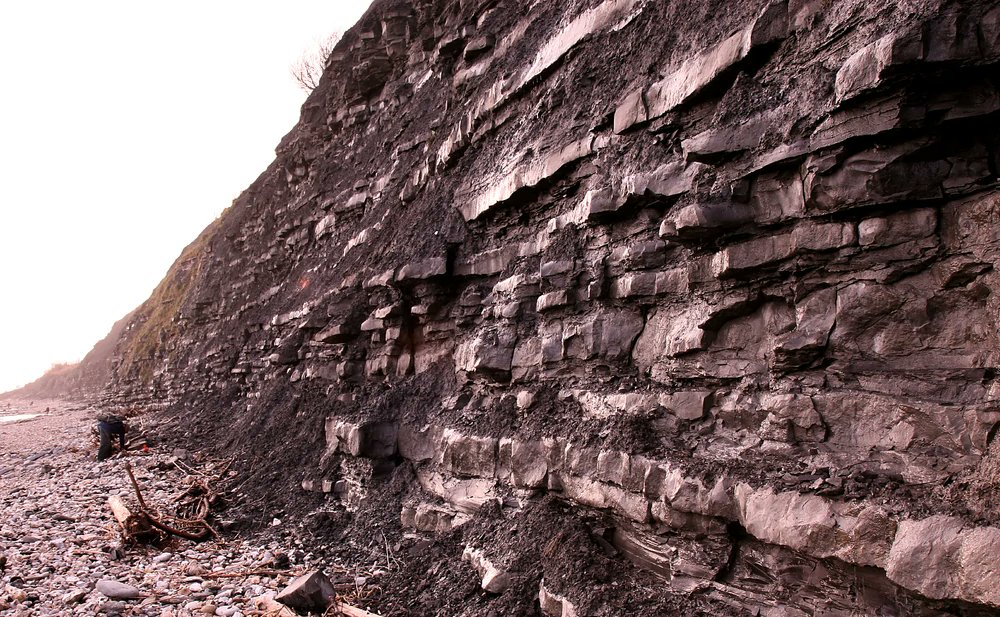
The Blue Lias cliffs near Lyme Regis, densely packed with fossils that erode out as the cliffs fall into the sea Blue Lias cliffs via Wikimedia Commons (CC BY-SA) -
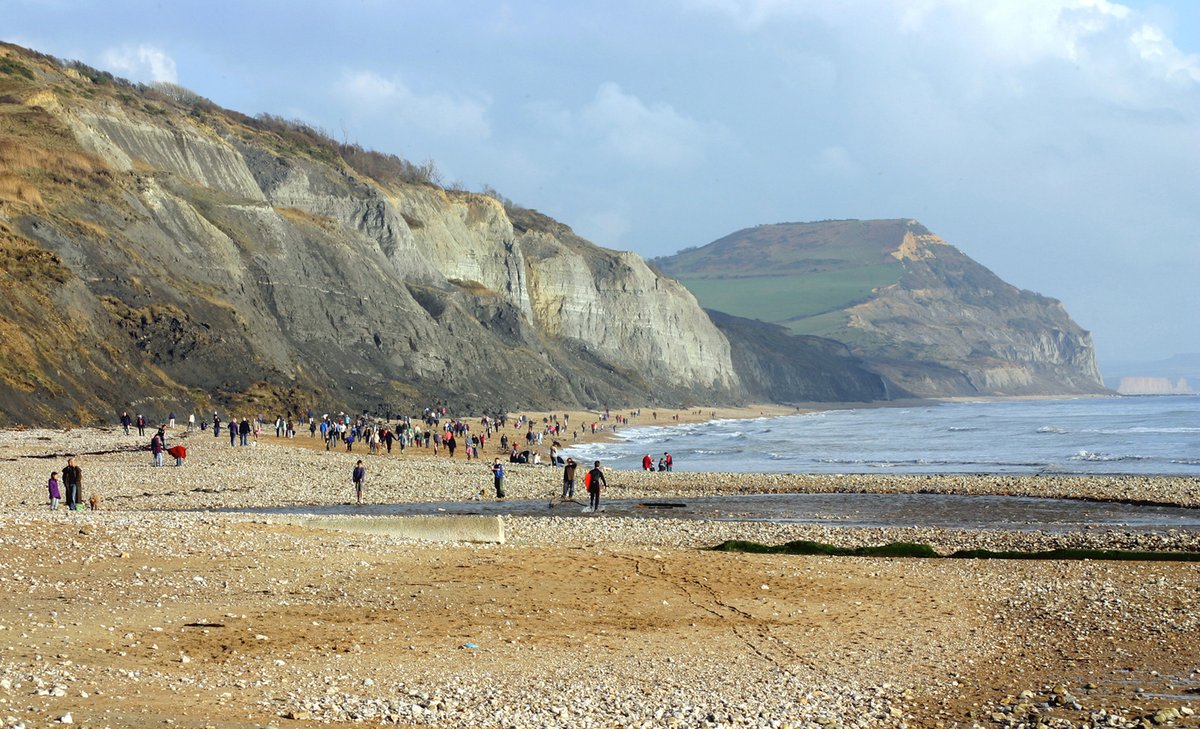
The fossil-rich shoreline at Lyme Regis, where Mary Anning hunted for fossils her entire life Charmouth beach, Jurassic Coast, by Pam Goodey via Wikimedia Commons (CC BY-SA 2.0) -
When Mary was a child her father taught her how to hunt for fossils, which at the time were sold as curiosities to tourists. When he died, when Mary was 10, the family were broke and Mary's sales of fossils became their primary source of income.
-
The most common kind of fossil was the ammonite, a curled shell you may recognize. Victorians did not know shit about fossils, so they called them "snakestones", going so far as to carve completely fictitious snake heads on to the ends before selling them as good luck charms.
-
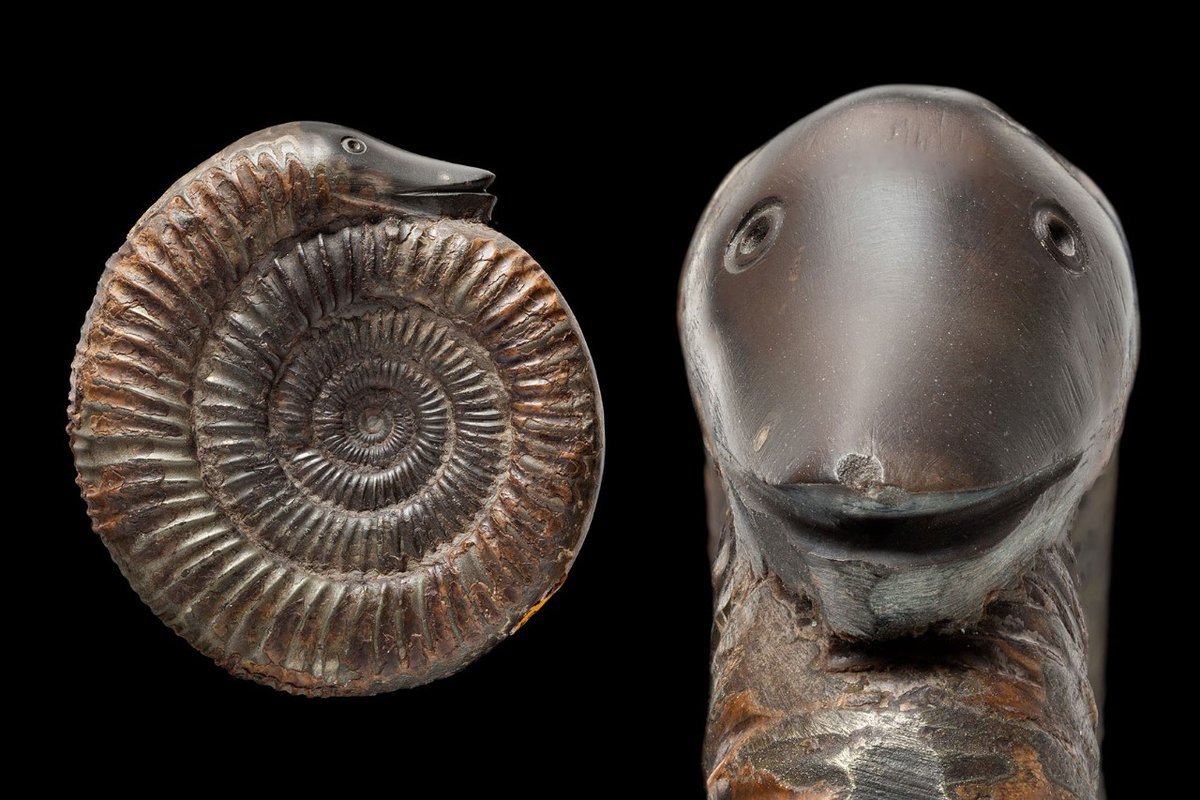
Ammonite fossils with snake heads carved onto them, sold as "snakestones" because Victorians had no idea what ammonites were Dactylioceras ammonite (snakestone) by James St. John via Wikimedia Commons (CC BY 2.0) -
At the time of Mary's birth the industrial revolution was kicking off. This produced a great deal of mining activity, which spurred what was previously a hobby, geology, into a full-time profession. It became profitable to know what was in rocks, and where to find those rocks.
-
One of the problems of turning geology into a science is that rocks are very old. This might not seem like too big a problem, except that at the time most people regarded the bible as the literal truth of the creation of the world, which would make earth about 4,000 years old.
-
There was a host of scientific discovery going on in the 1800s and much of it presented minor problems for theology but none so much as geology, which presented an extremely solid, widespread disproof of some clearly stated biblical claims. It was problematic.
-
It was made all the more problematic because, through an accident of history and culture, many of the earliest geologists were also employed as religious officials. Scholar-priests kept finding rocks were far too old and coming up with elaborate explanations to get around this.
-
Even more problematic was the presence of fossils. If god had created the earth 4,000 years ago exactly as it is now, what were fossils? The idea that species could go extinct was entirely unknown. So where were the ammonites? Maybe deep under the ocean?
-
If they were under the ocean, how'd they get up here in the cliffs? The idea that land masses could rise and fall was also unknown at this time. It was assumed the earth had always looked pretty much the same. So how were there remains of sea creatures on land? It was a puzzle.
-
An extremely popular explanation was the Great Flood as described in the bible. It could have moved a lot of water around, buried animals in mud and fossilized them, all sorts of things. Geologist-priests started trying to come up with a single, coherent story of the flood.
-
But the puzzle turned into a crisis when Mary Anning went fossil hunting and found, not a shell, but a skeleton, and a skeleton of an animal absolutely nobody had seen before. Half fish, half-lizard, it was named "ichthyosaurs", which literally means "fish lizard" in Greek.
-
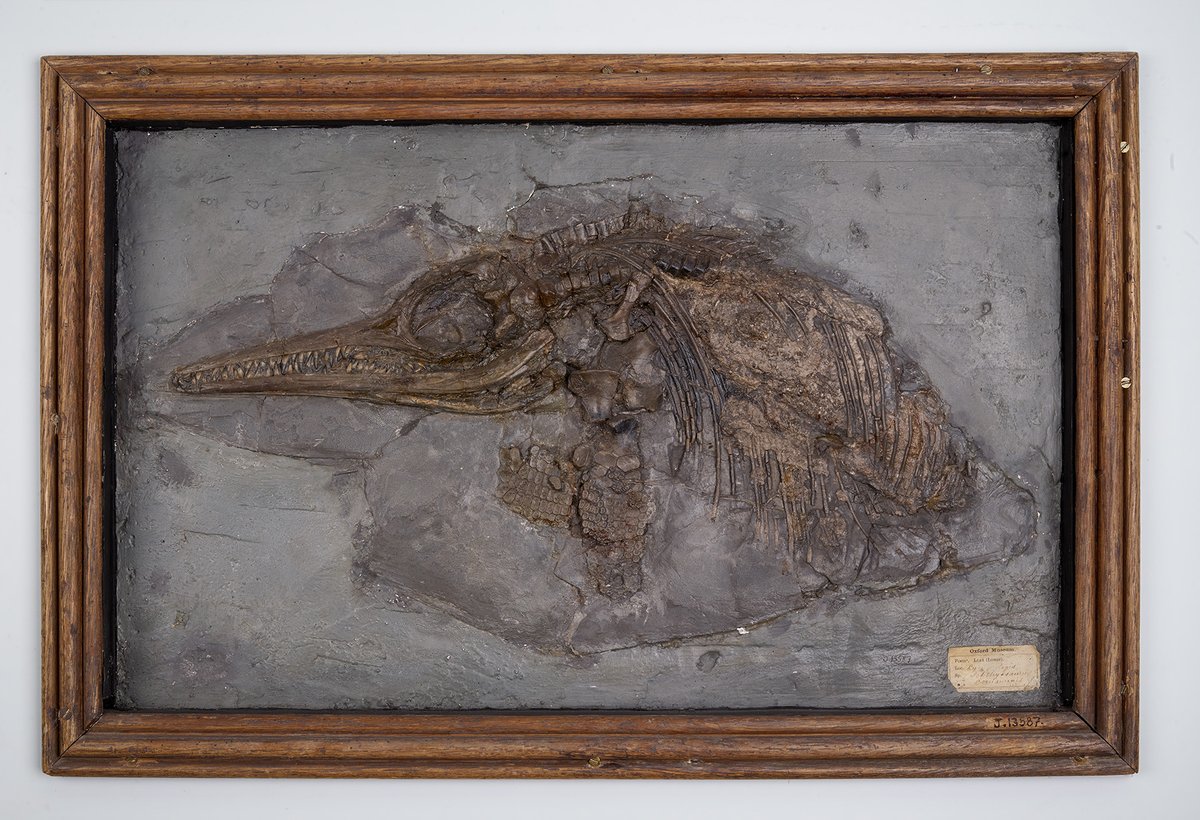
An ichthyosaur skeleton fossil, the "fish lizard" that Mary Anning discovered in the Lyme Regis cliffs and that baffled Victorian science Ichthyosaur fossil via Wikimedia Commons (CC BY-SA) -
Unlike the shells, which could be explained away, this was clearly a monster, 17 feet long, that had swam in the ocean, but nobody had ever seen one. It's hard to overstate the degree to which this rattled the Victorian scientist's view of the world. Where were they now?
-
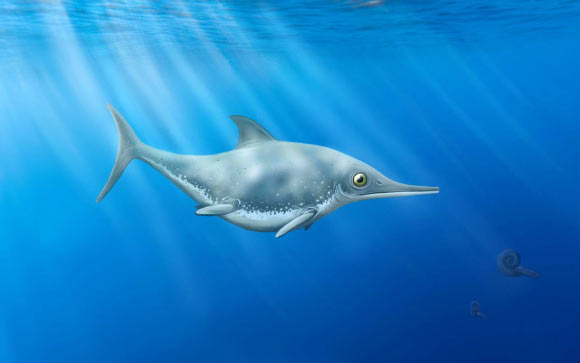
Artist's reconstruction of an ichthyosaur swimming, the ancient marine reptile whose skeleton Mary Anning first discovered Ichthyosaur reconstruction via Wikimedia Commons (CC BY-SA) -
Mary's find was not actually the first ichthyosaur to be discovered, but Mary was unusual in that she was methodical and scientific about where she found things, and knew enough about anatomy to describe how the creature must have looked and where it lived. She knew what it was.
-
Mary sold the ichthyosaur just like she sold everything else, to put bread on her table, to a man named William Bullock, a local nobleman. He took it to London and put it on public display, where it caused a sensation and got the attention of the budding scientific community.
-
Mary's name was not mentioned in regard to the discovery. It was described as Bullock's discovery. Budding scientists began to pour into Lyme Regis looking for more evidence of these creatures that they could find and then name after themselves.
-
But the funny thing was: it was all Mary. For decades, men of science went to Lyme Regis, paid Mary for whatever she'd found most recently, then returned triumphantly to London to describe their "discovery". They competed with each other's finds, but really they were all Mary's.
-
Mary's next major find was an even more bizarre creature, the plesiosaur, with a body like a fish but a long snake-like neck and huge teeth. Elsewhere, people began to follow her lead and found fossils of other large, ancient animals in other parts of the world. There was uproar.
-
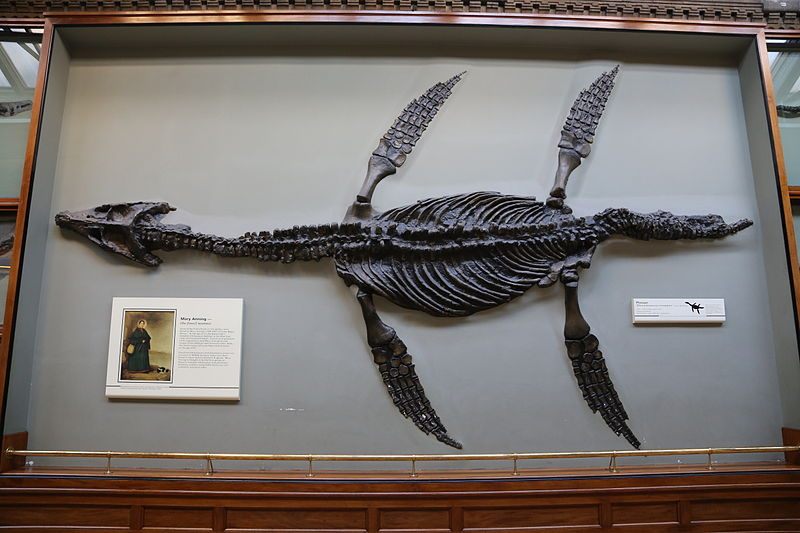
Plesiosaur skeleton on display at the Natural History Museum, London, one of Mary Anning's most significant finds Plesiosaur skeleton, Natural History Museum London, by Gary Todd via Wikimedia Commons (CC0) -
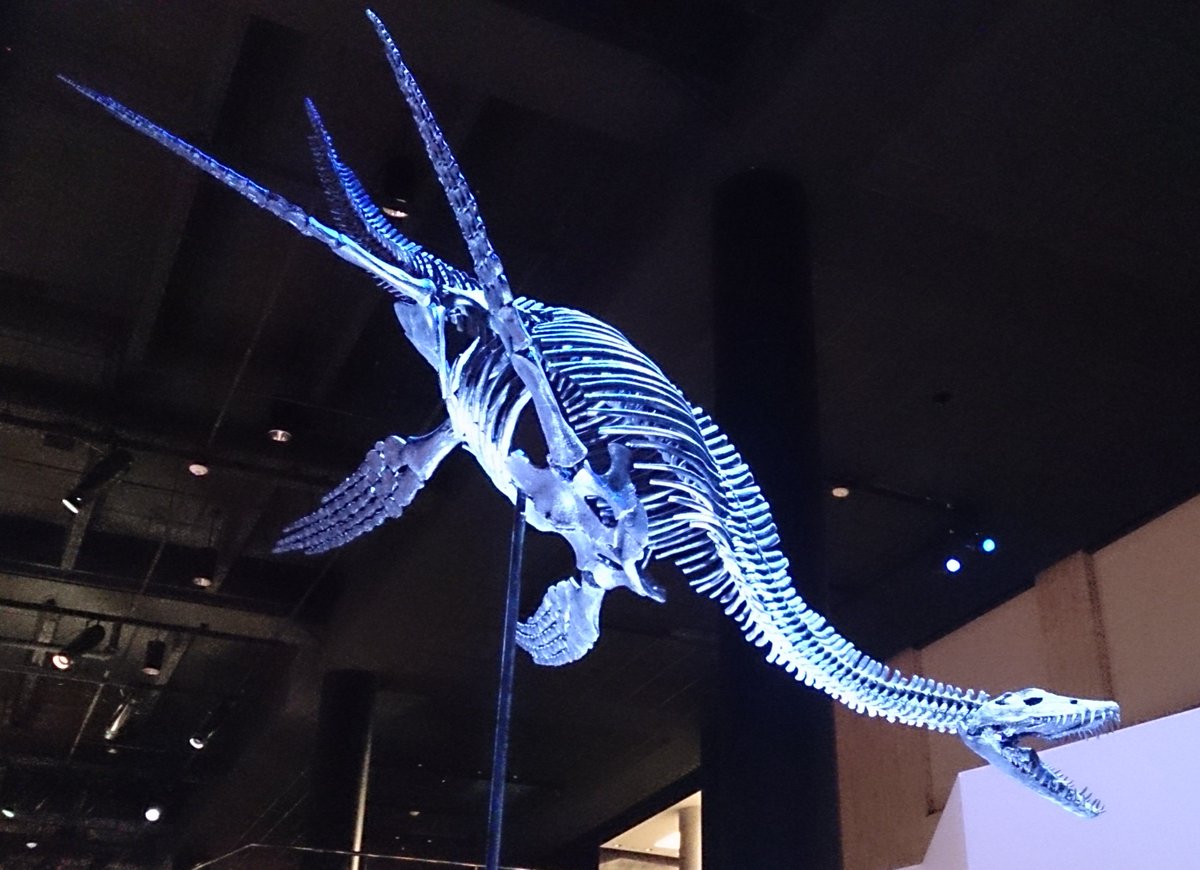
A plesiosaur skeleton on display, showing the remarkable long-necked marine reptile that Mary Anning discovered in 1823 Plesiosaur skeleton via Wikimedia Commons (CC BY-SA) -
Meanwhile Mary was getting on, scratching out a living selling the fossils, making meticulous illustrations and keeping up on the scientific literature, having in-depth debates with the leaders in the field, all of whom assiduously pretended to each other that she didn't exist.
-
There were a couple of exceptions. A man called William Buckland tried to give Mary her due and credit her for her findings. He and Mary had a productive professional partnership, discovering, classifying and explaining the fossils she was finding.
-
Buckland became particularly notorious for correctly identifying coprolites as what they were: fossilized dinosaur shit. To my extreme surprise I learned that ancient dinosaur shit can be cracked open and rehydrated and it retains its organic contents and also its smell.
-
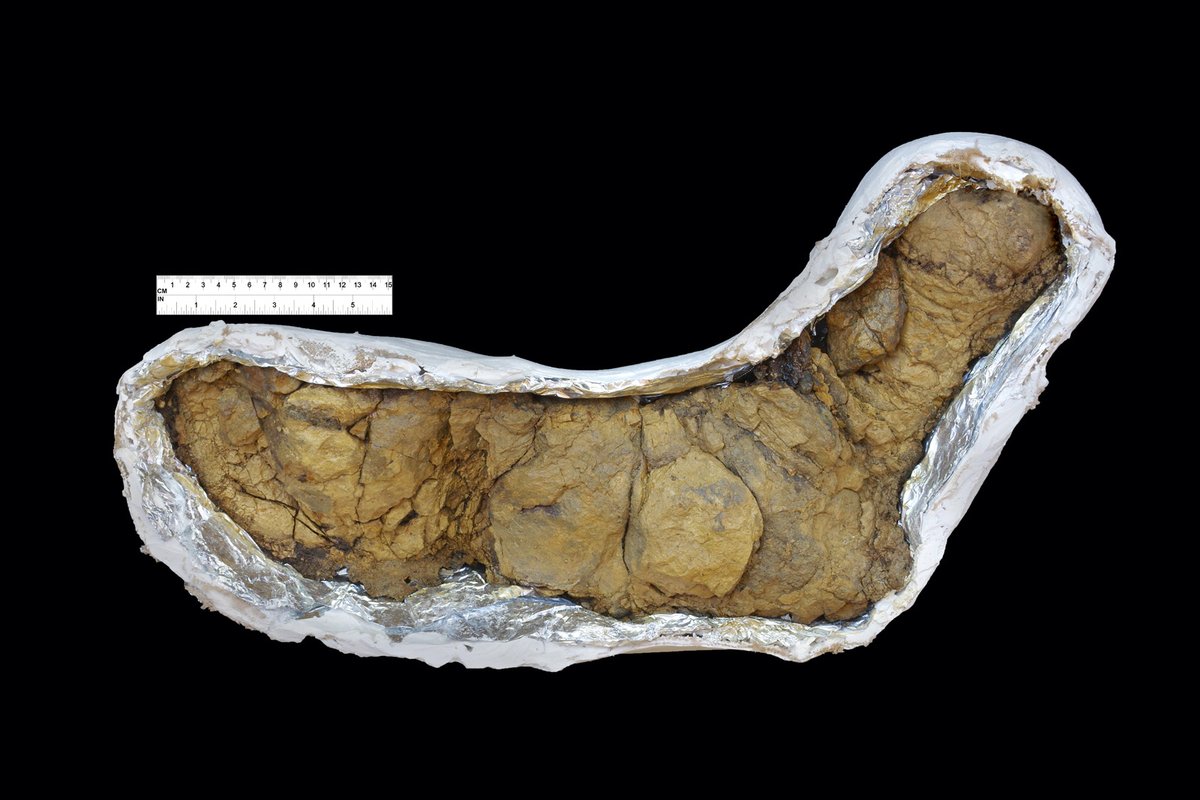
A fossilized coprolite (prehistoric poop), correctly identified as such by William Buckland, much to the horror of polite Victorian society Fossilized coprolite via Wikimedia Commons (CC BY-SA) -
This also caused the Victorians, notorious prudes, a great deal of trouble. Dinosaurs were already basically blasphemous (geology became known as the "underground science" as a reference to the hell-bound nature of its practitioners) but poop was taking things still further.
-
But there was no stopping the public fascination with dinosaurs, especially once Mary's friend Henry De La Beche began painting lurid pictures of an ancient world peopled by Mary's fossil findings, including her most recent discovery, the flying pterosaurs.
-
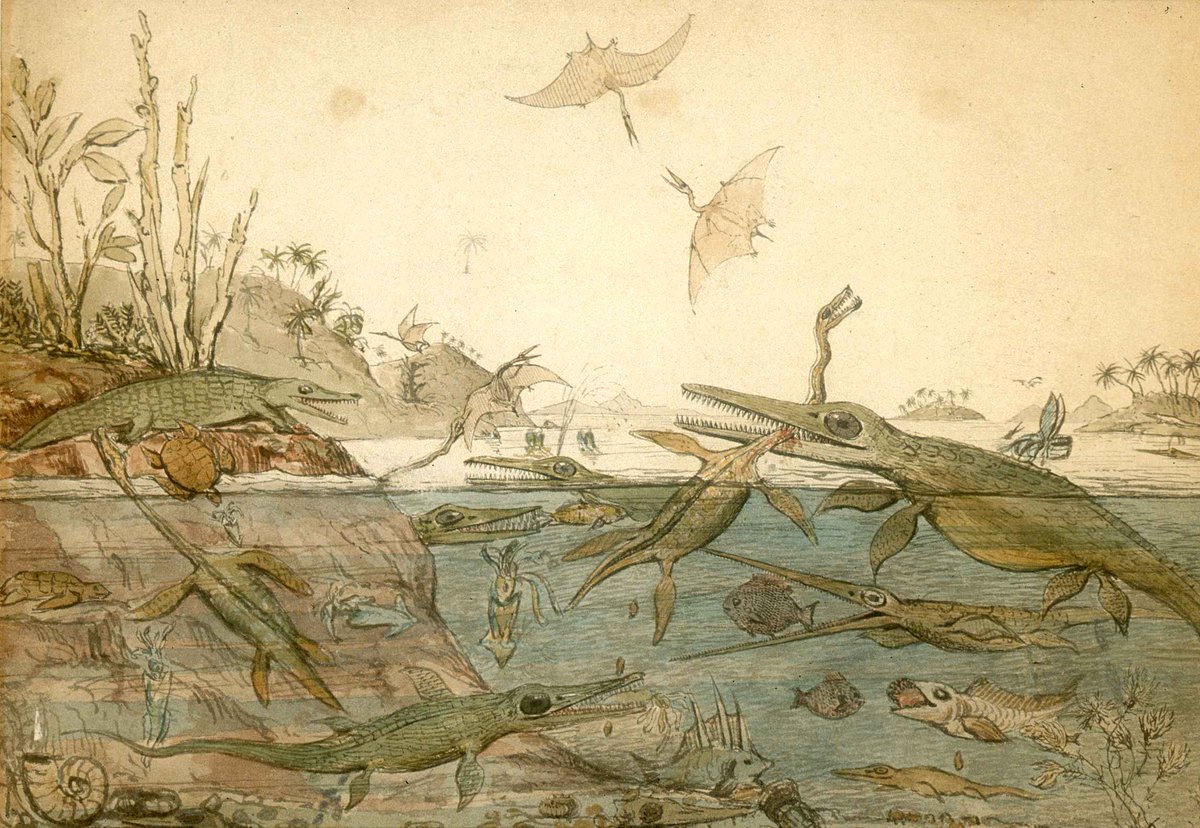
Duria Antiquior, Henry De La Beche's 1830 painting of Jurassic sea life based on Mary Anning's fossil discoveries, one of the first depictions of a prehistoric world Henry De La Beche, Duria Antiquior, 1830, public domain -
Mary's finds became incontrovertible proof that animals had gone extinct. Previously science had known that mastodons had existed but were no longer common, but assumed they were still around somewhere -- Thomas Jefferson funded expeditions to the American West looking for them.
-
Through the driving force of Mary's discoveries, science found itself forced to acknowledge that the Bible could not be literally true: the earth was too old, and animals had been created by god only to go extinct. Were they mistakes? Punishments? What was going on?
-
Mary's work paved the way for a more momentous, shocking discovery: that animals could change form, evolving from one form to another, and that this included human beings. But that shock was to come from our next subject, a guy called Charles Darwin.
-
Towards the end of Mary's life her contributions were so obvious and gigantic that the sexist scientific community began to acknowledge her at last. Several species were named after her, and as her health failed the government granted her a pension, so she did not die poor.
-
Mary's legacy is the upheaval of centuries of iron-bound certainty about the earth and everything living on it. She ignored decades of sexism and always knew the value of her work and took pride in it. She essentially started the entire science of paleontology.
-
P.S. There is a widely-disseminated story that the rhyme "she sells seashells by the seashore" was a tribute to Mary's life, and while this is delightful to think about there is unfortunately no evidence that it's true, except that it started around the time she lived.
-
P.P.S. There was a movie made in 2020 about Mary Anning that focuses heavily on a speculative lesbian relationship between Mary and another woman but even my strong desire to dig up queers in history can find no evidence of this. She was pretty butch tho.
Text and images copyright © 2020-2023 Laurie Voss
except where indicated
except where indicated